


👋 Friends,
After years of writing this newsletter, I’m switching up the format. I’m moving from one long-form post to a collection of shorter, more digestible stories that will continue to be observations/lessons from the world of startups, entrepreneurship, and business. The other change is that I’ll include more opportunities for you to share what you’re working on with my 63,000 readers. Scroll down!
✍️ This issue: what I learned spending $200,000 on an event, why looking cringe is often a prerequisite to success, and why meetings may look completely different in a few years.
📅 Upcoming events
Dec 7 | 🗽 The Shortlist: December Founder Showcase (NYC) – Meet the founders/CEOs of the fastest-growing tech companies in the city.
Dec 7 | 🤖 Soon Live: NYC - “How to Navigate the Dead Internet” (NYC) – My friends at Soon are hosting an epic tech party + panel with the founders of Coframe and Pangram. There will be an open bar, lots of interesting content, and a party to end the night. A Fibe partner event.
Dec 9 | 🍽️ Junto Founder Dinner (NYC) – Apply to attend. Join a handpicked group of early-stage venture-backed NYC CEOs and founders for dinner on us. Our last one of the year.
• • •
What I learned spending $200,000 on a conference
Two weeks ago, we hosted our annual Outliers Summit.
It was a success, with over 2,000 people attending throughout the week and an overwhelming volume of online coverage.
But even after doing this three times, it’s still an extraordinarily complex operational challenge.
I spent ~$200,000, and it took MONTHS of planning.
The three months leading up to it are the most stressful period of the year for our team at Fibe.
So why keep doing it?
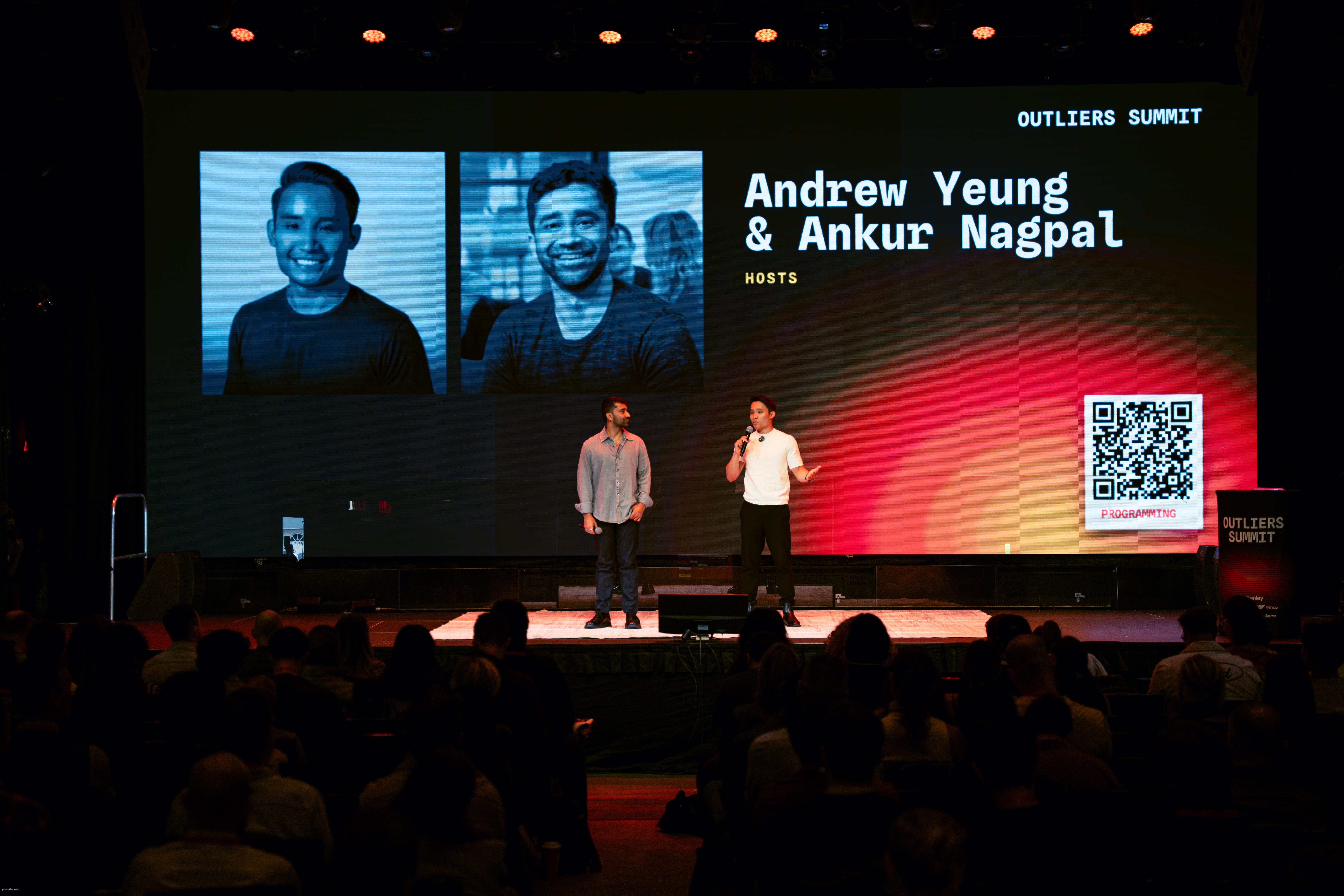
My friend Ankur and I hosted our first summit three years ago as an experiment.
Years later, I still meet people who started companies, kicked off creator careers, and made lifelong friends because of that single event. That’s why I love producing events.
I’ve observed that some of the most transformational moments in our lives happen in person.
Like weddings, anniversaries, or your first day on the job.
For me, it was Summit at Sea in 2023, when I first decided to leave my job at Google. That event changed the trajectory of my career and gave me the confidence to take action.
The reason I keep hosting Outliers is simple: I want other people to have a catalyst like that too.
But it’s definitely not all smooth sailing.
After doing this for the third time, here are some of the biggest things I’ve learned.
(If you happen to plan a summit for yourself, I hope this helps.)
First, understand the asymmetric risks and complexity. We dealt with thousands of attendees, speakers, sponsors, vendors, volunteers, weather, ticketing, complaints, and hundreds of tiny things that can go wrong on a single day. Sam Parr said on stage that he stopped hosting conferences because of the concentration risk of so much revenue depending on ONE single day. If something goes wrong, whether it’s weather, the venue, or something else, it can all go to crap. Know this before you start.
Have a Plan C for everything. My team thought I was nuts because I had scenarios for everything. What if we lost our venue? What if a keynote speaker didn’t show up? What if there was a level 5 disaster? The cool thing about being in this line of work is that it trains your brain to think exhaustively, through all possible scenarios, which prepares you for a bunch of other real-life situations.
Choose your pricing carefully. Pricing IS positioning. We were surprised to see more refunds and chargebacks at the lower ticket tiers than from people who paid at the higher tiers. The price changes the commitment: Someone paying $50 might treat it like an optional weekend plan, but someone paying $500 or $1,000 is making a very different decision.
We treated the event itself as a content engine. We didn’t spend a SINGLE dollar on paid marketing, yet sold 1,000 tickets through Ankur’s and my social channels and newsletters. I don’t think there was ever a point where we were particularly stressed about ticket sales because we had a pretty well-oiled content machine.
For months, I posted about Outliers 2-3 times a week. Every speaker announcement became content. Every new feature became content. Every partner became content. Every milestone became another reason to talk about the event. If you don’t have distribution, it’s a completely different game.
We also spent a ton on high-quality photography and video. I knew that if we wanted speakers, sponsors, and attendees to share the event, we needed to give them great content to share.
So far, we’ve influenced 200+ pieces of organic content and over 2 million impressions, and the numbers are still growing.
I’ve started to think about physical experiences this way: a lot of the physical world eventually becomes fuel for the digital world. People WANT to post. Give them something worth posting.
We only invited people we actually wanted to hear from. We didn’t pay an agency to find speakers. Most were people in our orbit, people we’ve worked with, or people whose stories genuinely interested us.
I think conferences get worse when you optimize purely for recognizable names. I’d rather hear from someone who has done something unusual and can explain exactly how they did it.
We also shared the stage. Beyond the speakers, I invited eight other people to MC and moderate conversations. It made a BIG difference. Great MCs are underrated. They maintain the energy of the room and make the entire event feel more alive.
I also asked four people from my team to speak in front of 1,000+ people. Seeing them thrive on stage was honestly one of my favorite parts of the entire week.
No amount of planning removes the need to improvise. However much work you think an event requires, estimate 50% more. And even then, something will happen.
e.g. three hours before one of our keynotes, a speaker fell ill and couldn’t make it. I called my friend Jay and asked if he could step in. He said yes. A few hours later, he was giving a keynote in front of 1,000 people and absolutely crushed it.
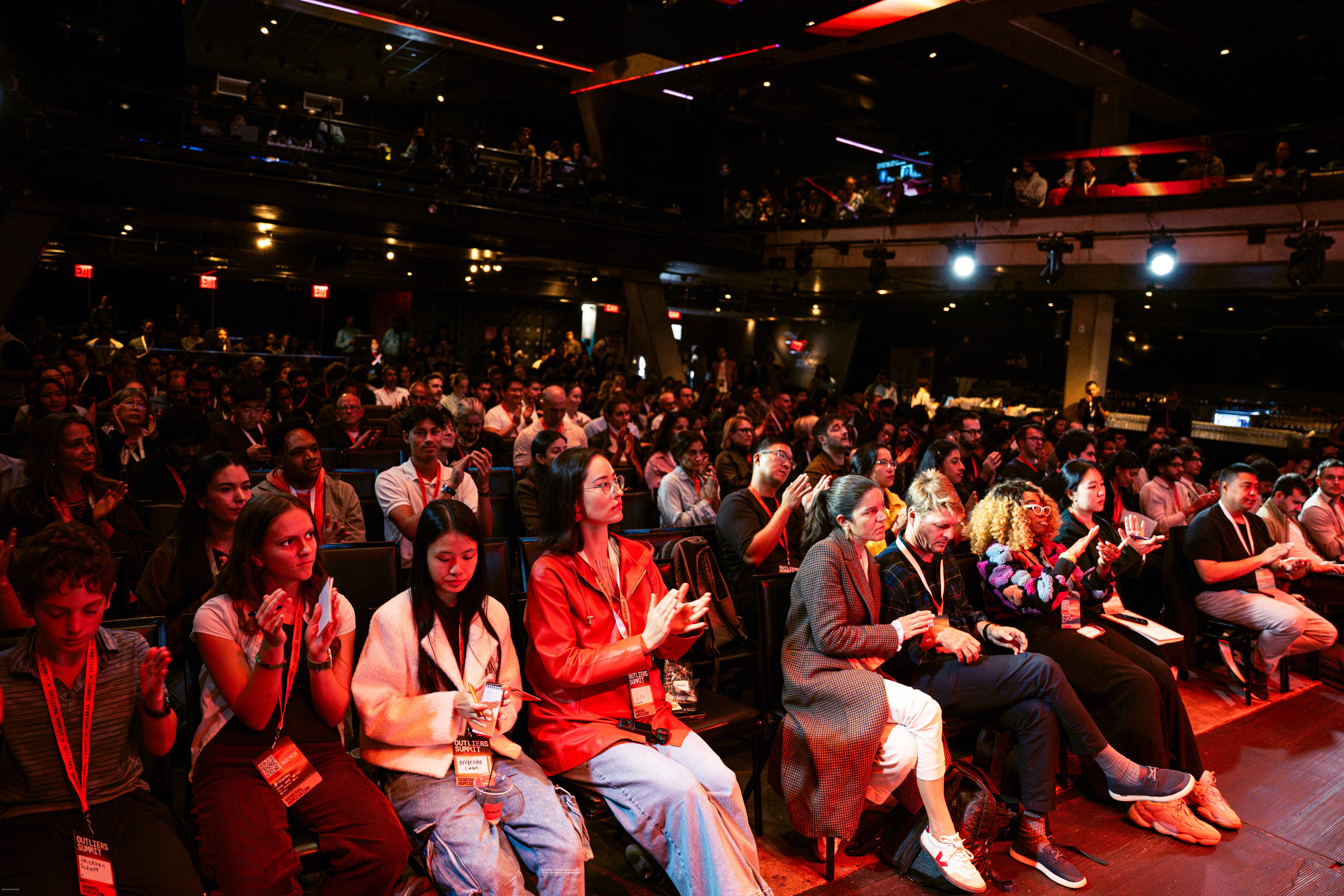
A few other things I noticed
Entrepreneurs are starting younger. I believe we had a 12-year-old in the audience, alongside a bunch of people under 18 already thinking about building businesses. At 12, I definitely wasn’t thinking about starting a company. It challenges the idea that you have to wait until a certain age to start.
New York’s pull is legit. It was amazing to see people fly in from all over the world to attend. It feels like every year, more founders and ambitious people see New York as a place where they need to spend time.
People want access, not just content. Sam Parr had close to 100 people waiting to meet him after his talk. The line lasted almost two hours. We definitely did NOT plan for that properly.
By the end of the week, I was exhausted. And, naturally, I already had a list of probably 50 things I want to change next year.
But then I think about the 12-year-old sitting in the audience.
Jay unexpectedly ending up on stage.
The people who flew across the world to be there.
The hundreds of conversations happening in hallways that I’ll never know about.
And years from now, I’ll probably meet someone who tells me they met their cofounder, started a company, launched their creator career, or made some big life decision because of someone they met that week.
Thank you to everyone who came by!
• • •
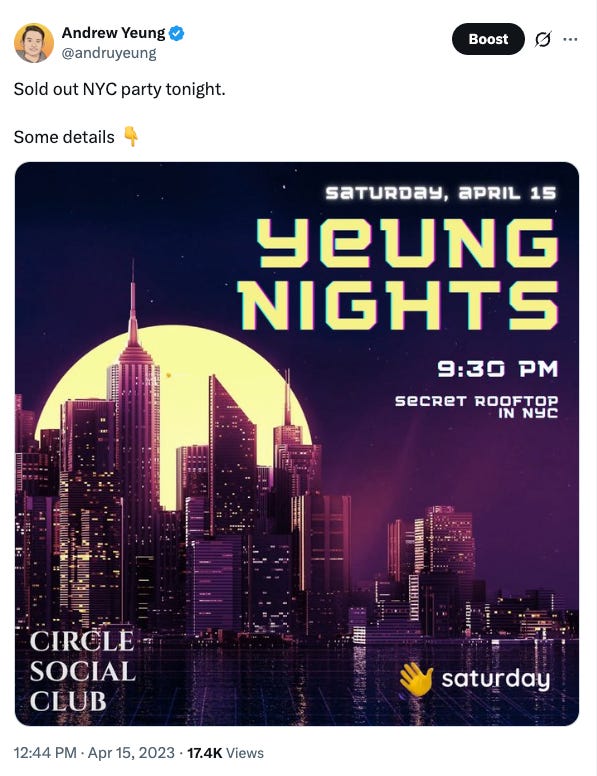
Most people quit before it works
There’s a common pattern I’ve noticed among people who have outlier success in their careers. Most won’t admit it, but I will.
You have to be cringe.
Posting on LinkedIn is cringe, until a stranger DMs you with a life-changing opportunity.
Filming yourself in public is cringe, until your video gets a million views.
Telling your story on stage is cringe, until someone tells you your talk changed their mind.
Asking for referrals is cringe, until half your business comes from them.
Asking for a raise is cringe, until you get it.
The funny thing is that it stops being cringe once it starts working.
After doing this for 6 years, I still cringe at least once a day. Then I look at the results and the impact, and it feels a lot less cringe.
Cringe is the entry price to outlier success, yet most people never pay it.
• • •
📌 Things I’m reading
Things that recently made me laugh, made me think, or expanded my mind.
The key to effective workplace communication (post) – At Facebook, we were rigorous about workplace communication. We wanted to avoid “communication debt” – a fancy word that refers to organizational miscommunication. I use the same principles at Fibe today. This is a technique ANYONE can use, and your manager will love you for it.
Becoming a Better Writer (article) – Somehow, the skill of effective writing is becoming MORE, not less, important in the AI era. This is a solid primer on improving your business writing.
The Decline of Deviance (article) – “People are less weird than they used to be.” A fascinating observation on how brands are more bland, design is less textured, and how we as a society are regressing to the mean.
• • •
My takeaways from Zoom’s CTO
I recently flew to LA for Zoomtopia, Zoom’s flagship customer event, to meet Zoom’s CTO, X.D. Huang, and one idea from our conversation has been stuck in my head ever since.
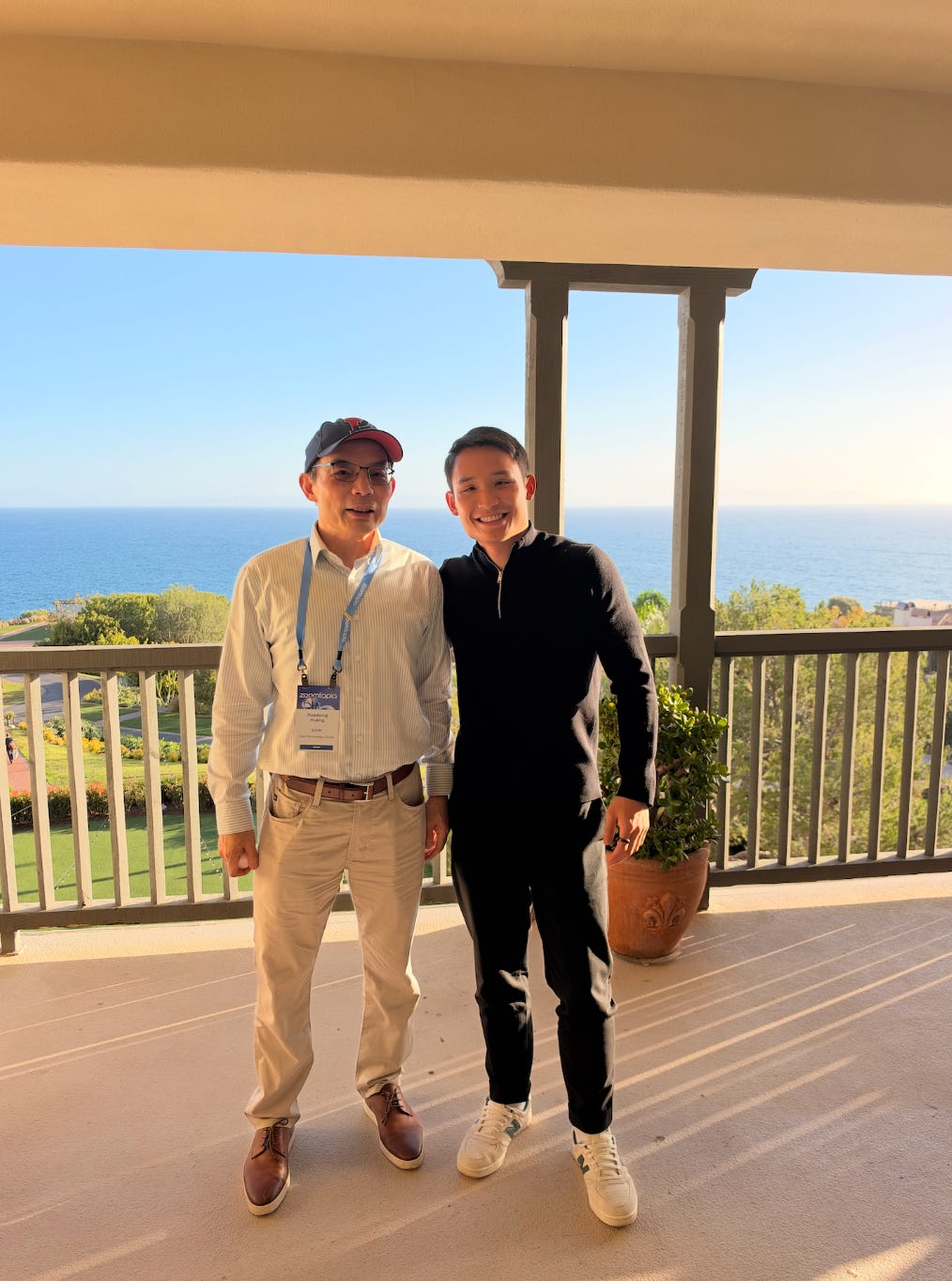
X.D. is one of the OGs of voice AI. He founded Microsoft’s speech technology group in 1993 and has spent more than three decades teaching computers to understand human conversation.
My biggest takeaway from meeting him and the event: Meetings are about to change dramatically.
At Zoomtopia, Zoom gave me a preview of some of the technology they’re building.
One example is My Notes, which captures conversations on Zoom, Teams, Meet, or in-person meetings, summarizes them, and turns them into action items. Cool, but I think the bigger idea is what happens next.
For AI agents to actually do work for us, they need more than a task. They need context: Why are we doing this? What did we decide last week? Who owns what? What does this person actually mean when they say “launch”?
Zoom is building what it calls a unified context layer, where its AI can understand conversations, decisions, action items, chats, and other information across your work, then use that context to help get things done.
That changes the purpose of a meeting. Today, we have a meeting to talk about the work. Then the meeting ends, and we go do the work.
I think that separation is going to disappear.
You might be sitting in a meeting discussing a new campaign while an agent updates the project plan, drafts the creative brief, assigns tasks, schedules the follow-up, and starts executing the things you just decided.
I’ve already seen a few friends running early-stage startups this way. It’s mind-blowing.
The future of meetings might not be better video calls. It might be meetings where the work happens in real time.
Thanks to Zoom for bringing me out to LA and giving me a peek at what they’re building.
• • •
💃 Tech community plugs
Helpful resources for tech and business professionals.
For founders
💼 Hiring top GTM, ops & engineering talent in NYC? Apply to pitch at our monthly Shortlist founder showcase and meet the top 1% operators from my network.
🏢 Looking for an office space in NYC? I know of a few great spots opening up. Hit reply if you’re searching.
🚀 Forum Ventures is closing out their Winter cohort. If you have been thinking about applying, this is the last call. A few spots left for B2B founders who want a real partner, not just a check. Apply here.
🏦 Fidelity Private Shares is the best-in-class equity management platform with 409A valuations and a secure data room. With Fidelity Private Shares, you’re always fundraise-ready. To learn more, reach out to Charlie Stephens at Fidelity for support! Learn more.
For your career
✍️ Your AI Head of Content. I’ve been using Stanley for months, and it’s the only reason I could run two companies and still grow 100K+ followers this year. It texts me what to post, tells me what’s working, and auto-schedules everything from my iMessage. Free to try for 30 days with code ANDREW here.
📚 My friend Jay Yang, a 20-year-old entrepreneur and 2x published author, just published his NEW book: Work With the Best. Jay is one of the most impressive people I’ve met. Check his book out!
🗽 The New York Business Fellowship (NYBF) is a one-week, in-person selective program in New York City for graduates, young professionals, and founders from around the world. Through mentor sessions with executives, company visits, workshops, and networking, Fellows gain direct access to New York’s business ecosystem. I’ve been watching these guys cook from the sidelines. What they’ve built is impressive! Check it out.
Useful stuff
🍽️ InKind – the ultimate dining app for foodies … earn up to 30% back when you eat out, plus get $50 off your bill every month at select spots. And as a bonus, we both get $25 free when you sign up. Sign up here.
🧮 Need a CPA? I’ll introduce you to Alex, who I’ve worked with for the past three years. He’s excellent and specializes in tax support for high-earning individuals and entrepreneurs. More info here.
🇺🇸 Looking for help with US immigration? Reply here – I’ll connect you with the attorneys and team I trust for visas, green cards, and all the corporate immigration matters.
What else should I promote? Hit reply and let me know.
• • •
🖥️ (Sponsored) Your customers are asking AI about you. Do you know what it says?
Profound University just launched two new courses for marketers who want to win in AI search.
More buyers now start their research by asking ChatGPT or Gemini, not by scrolling Google. That shift means the brands that get recommended aren’t always the best ones. They’re the ones answer engines understand. Profound, the AI marketing platform used by 16% of the Fortune 500 (including Comcast, Walmart, and U.S. Bank), built its new Introduction to Answer Engine Optimization course to teach exactly that: what AEO is, how answer engines work, and why it matters for your business.
The second course, Introduction to Agentic Marketing, is the one I’d start with. It teaches you to think about your marketing as a system and decide what to automate first, which is the hardest question most teams skip. Both courses draw on Profound’s research and real customer stories, and together they make up the curriculum for becoming a Certified Marketing Engineer.
👉 Start learning at Profound University.
#ProfoundPartner
• • •
Appreciate you making it to the end. Since you’ve made it this far, I’d love to hear from you:
What stood out from this issue?
What should I write about next?
With gratitude,
Andrew Yeung (LinkedIn)
Really valuable insights, basically a crash course for event planning. Very true: you always need a plan C.
PS: it’s an honor to see the New York Business Fellowship featured!
Thank you Andrew
Great lessons.